Gene Hackman had an acting career spanning the second half of the twentieth century and into the twenty-first. Winner of two Academy awards, over his career he had many other awards and nominations. I consider Hackman’s performances to be grounded and real, so in memory of a great actor, here are some of my favourite performances of Gene Hackman.
In “Young Frankenstein” Hackman played a small but memorable role as a blind hermit who the creature stumbles across. He is friendly and cannot see to be intimidated by the creature, so the creature is encouraged to stay. However it seems the hermit is not very good at dealing with the limitations of his blindness, leading to a series of hilarious mishaps like pouring soup all over the creature instead of into a bowl, smashing his cup so he can’t have a drink, and culminating in setting fire to his finger instead of lighting a cigar. His final words as the creature runs away yelling are ‘I was going to make espresso’. Hackman had not done a lot of comedy at this point but he is hilarious in this role, selling a meek and mild persona which is juxtaposed with hilarious visual gags. He is only in one scene, but in a film with some great comedic actors (Gene Wilder, Marty Feldmen, Madeline Kahn) he makes a memorable impression.

“The French Connection” is one of Hackman’s best known performances, as the policeman Jimmy ‘Popeye’ Doyle, for which he won an Academy Award. The film is based on actual events involving drug smuggling from Europe to America. It’s an intense, neo-noir thriller, and Hackman shines as the main character, a policeman who is determined and ruthless in his pursuit of the criminals. A famous scene that illustrates the dedication of the character to catching the criminals is the car chase scene, long held up as one of the best in cinema, where Doyle drives a car at high speed under a L train in order to catch the suspect he has seen boarding it. I think Hackman’s ability to give realistic performances really pays off here, as the intent is to have a realistic depiction of what it is like to do police work for years and to be trying to catch dangerous criminals. Doyle is not a nice man, not really likeable. Hackman shows why that is, why people who work in these areas become like this. It is a fabulous performance.

In “The Conversation” Hackman is a surveillance expert called Harry Caul, who is hired by a mysterious client to record the conversation of two people walking through Union Square. Caul is very good at his job and manages to filter out background noise and obtain a clear recording of what the couple say to each other. As a result of this Harry believes the couple are going to be murdered by the client. He always insists on his objectivity, having no responsibility for what a client might do with the provided information, but in reality he experiences a great deal of guilt. Again Hackman is superb – the character is a very private individual, guarding his own security jealously, and Hackman is able to portray the repressions and anxieties of the character just as convincingly as the more extreme characters. The character of Caul is essentially a tragic one, a man whose career is at war with his ethics, a combination which ends up almost destroying him. This is a great role, and many believe it to be his best.

“Unforgiven” has Hackman playing Sheriff ‘Little’ Bill Daggett, sheriff of Big Whiskey. He is a ruthless man, but with a rather skewed sense of law and order. When a man visiting a local prostitute cuts her face with a knife, permanently disfiguring her, Daggett’s response is for the man to pay a fine (in ponies) to the prostitute’s employer. The prostitutes are outraged and take up a collection, putting up a reward for the death of the man responsible. Hackman does a great job playing this character who is anything but cliché. He is intent on keeping the peace, often to the detriment of what we might consider fair and just. He beats and humiliates a visiting gunslinger who wants to collect the reward, solely in order to ensure no one else comes and creates problems. While he is essentially the antagonist in this film, you can’t really see him as any worse than anyone else. There are very few characters in this story who can be considered as good. Also he and the protagonist (William Munny played by Clint Eastwood) only meet twice, once early on when Daggett takes advantage of Munny’s illness and beats him up, then at the end of the movie when Munny comes to take revenge for his friend’s death (Ned, who Daggett has beaten to death trying to get information on Munny’s whereabouts.) The character is a complex one, ruthless, racist, law-abiding (depending on your viewpoint), and Hackman ably demonstrates the various shades of Daggett brilliantly.
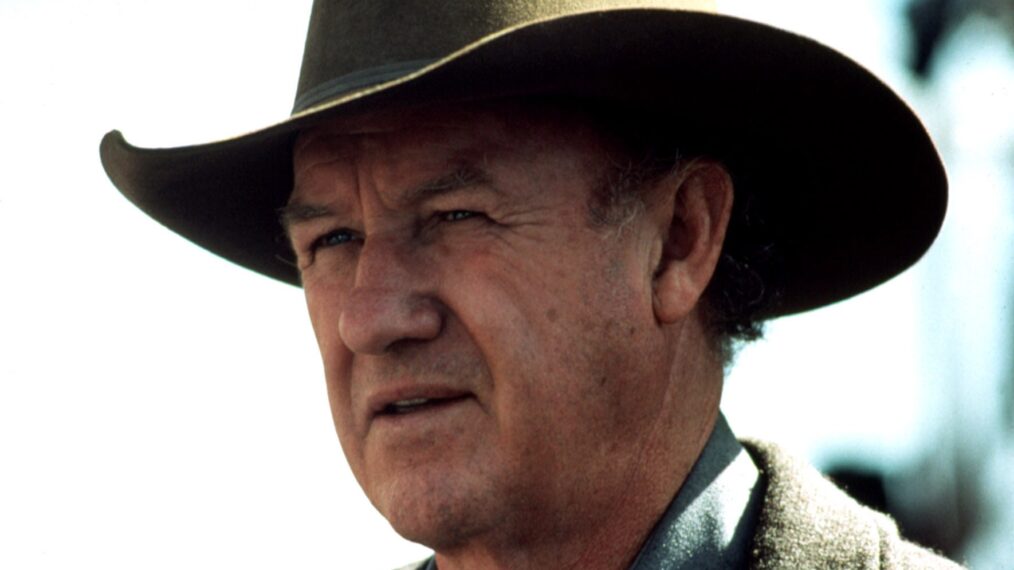
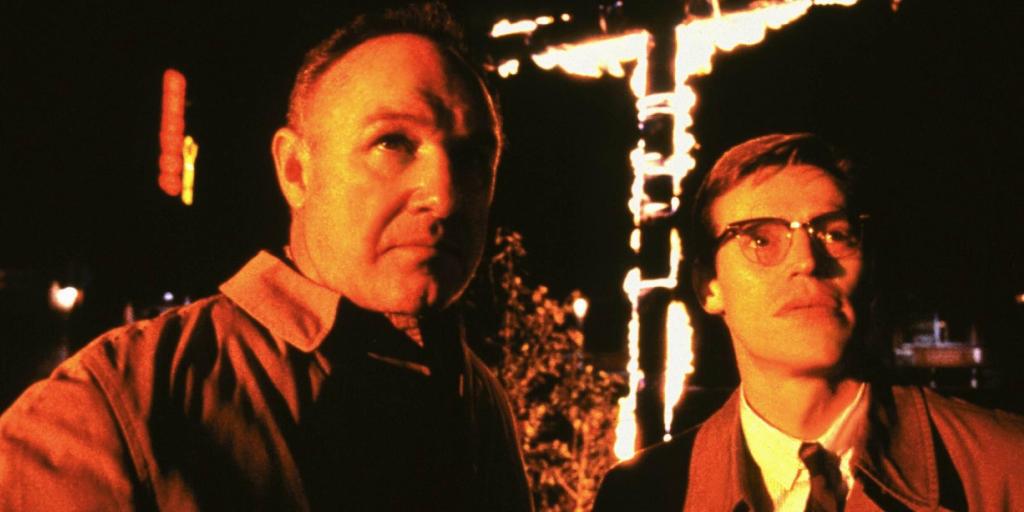
In “Mississippi Burning” Hackman plays FBI agent Rupert Anderson, a former sheriff from Mississippi who is now a FBI agent. He comes along with other agents led by Alan Ward to investigate the deaths of civil rights workers. I find the character of Anderson to be another character who has more depths than on first appearance, and Hackman again rises to the challenge of portraying the complexities of the character. He is someone who was raised up and worked in that highly racist and unequal area, but has come to understand that what is considered acceptable by so many there is in fact morally wrong. Anderson understands that the moral outrage of his boss Ward will not achieve anything. His understanding of the people involved and why they do what they do is far more likely to achieve an outcome. Hackman is, as always, very real and down to earth in bringing this role to the screen.
In conclusion, Gene Hackman was a grounded actor who was capable of diverse performances and styles. He was always interesting to watch and was able to give immense depth to his performances. He was a credit to the film industry.
 Eclectic Assemblage