There are a lot of debates about the definition of science fiction. There are many different opinions on good and bad movies, and a million ‘best of’ list articles on the internet. I won’t presume to call this a list of best films. This will be a list of science fiction films I have seen and liked a lot. It’s not conclusive and will be in no particular order. As for whether these films are ‘real science fiction’ or not is a matter of opinion. I think they are. I will try not to include spoilers.
“Arrival” (2016)
Director: Dennis Villeneuve
Starring: Amy Adams, Jeremy Renner.
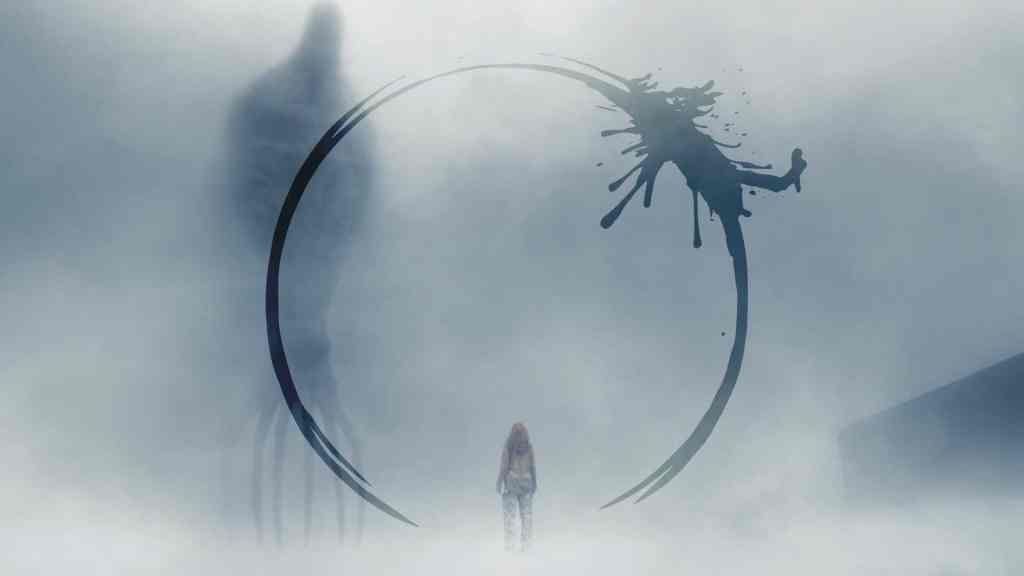
When I first started watching this movie, I was reminded of a short story I read once called “Try to Remember” by Frank Herbert. As it happens the film is based on a different short story, “Story of Your Life” by Ted Chiang (which I have also read). The setups of both these stories have similarities, but the general motivations of the aliens in each story make them very different. The film differs from its source material in one very specific area, but I actually think the change is an improvement, as it makes the main character more sympathetic. I really love “Arrival” – I find the aliens fascinating and their mode of communication unique and different. It is hard to find something genuinely unique in film these days. I remember wondering about the constant flashbacks, which made the explanation of these more impactful when it happened. The cast are all excellent, the plot is convoluted enough to leave you guessing, and the character’s motivations are very believable. It’s just a fascinating movie.
“Blade Runner” (1982)
Director: Ridley Scott
Starring: Harrison Ford, Rutger Hauer
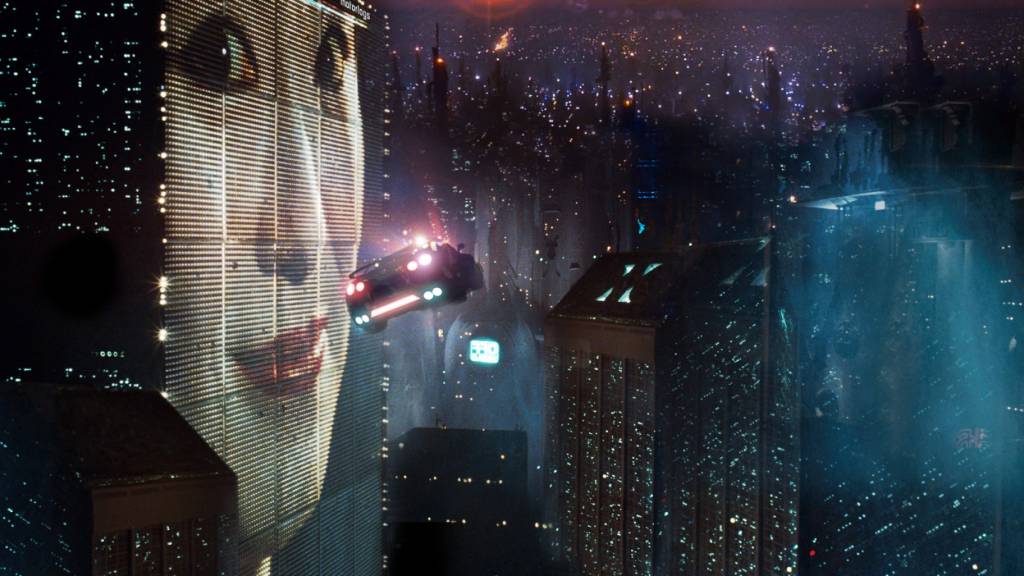
Philip K Dick’s story “Do Androids Dream of Electric Sheep” is the basis for this film, though in my opinion ‘inspired by’ would be more descriptive than ‘based on’. The plot is quite different, and the meaning of the two stories are almost exactly opposite to each other. I first saw the theatrical cut of “Blade Runner” when it first came out at the cinema. I liked it very much, but I felt it was flawed. I was quite young and couldn’t put my finger on it, but something was stopping it from being a great movie. This film includes some fantastic world-building of a dystopian future, and a great score by Vangelis, both adding to its impact and ambience. Then later, I saw the first director’s cut. They removed the voiceover and ended the film with Harrison Ford and Sean Young entering the elevator, removing the entirely unnecessary final sequence. Now, I thought, this is a great movie. The ambiguity of the ending doesn’t bother me, because there is ambiguity underpinning the entire film. What is identity, how do you know your memories are real in a world that can implant them, how do you know you are you, or a manufactured construct masquerading as you? Pinocchio, not as real a boy as he imagines. “Blade Runner” speaks to me because of these questions.
“Children of Men” (2006)
Director: Alfonso Cuaron
Starring: Clive Owen, Julieanne Moore

End of the world movies are a dime a dozen, and have a multitude of different scenarios for how this would come about. Certainly the damage done by humanity to its environment is often used, but I’m not aware of this particular idea being used very often. Fertility has dropped to zero – no more babies, therefore in a generation, no more people. People react to this predictably, by going crazy, so the viewer walks into a world of martial law, ecological breakdown, black markets, terrorism, refugees etc. In the middle of this, there is one pregnant woman, a miracle. The story follows the main character’s attempts to protect her. There is so much good to say about this movie. The performances are stellar, the direction is on point, the cinematography deservedly won awards (there are some famous long shots in this that are just incredible), and it is horrifying, tragic, sublime and full of hope all at the same time. It’s a beautiful movie.
“Gattaca” (1997)
Director: Andrew Niccol
Starring: Ethan Hawke, Uma Thurman.

Medicine is researching ways to fix genetic illnesses and abnormalities. Imagine if such science reached the point that you could genetically engineer your child to be tailored to exactly what you want – no imperfections, no abnormalities, the preferred skin colour, hair colour, eye colour, height etc. This leads to a world where eugenics rules, and anyone born without that genetic tailoring faces discrimination, being barred from certain jobs and advantages. The natural born are ‘invalid’ and while discrimination is supposedly illegal in practise genetic profiling relegates them to menial jobs (much like discrimination in the workforce today is alive and well because it is hard to prove). It’s a message driven movie which can be a bad thing but works perfectly in this instance. It has so much to say about the human susceptibility to artificially create hierarchies and cliques, excluding the ‘other’ (in this case, the ‘invalid’) from any real future. They are not judged on their own merits, but on something that has little or nothing to do with their abilities. “Gattaca” gives you so much to think about, helped along by stellar performances from a strong cast.
“Ex Machina” (2014)
Director: Alex Garland
Starring: Domnhall Gleeson, Alicia Vikander.
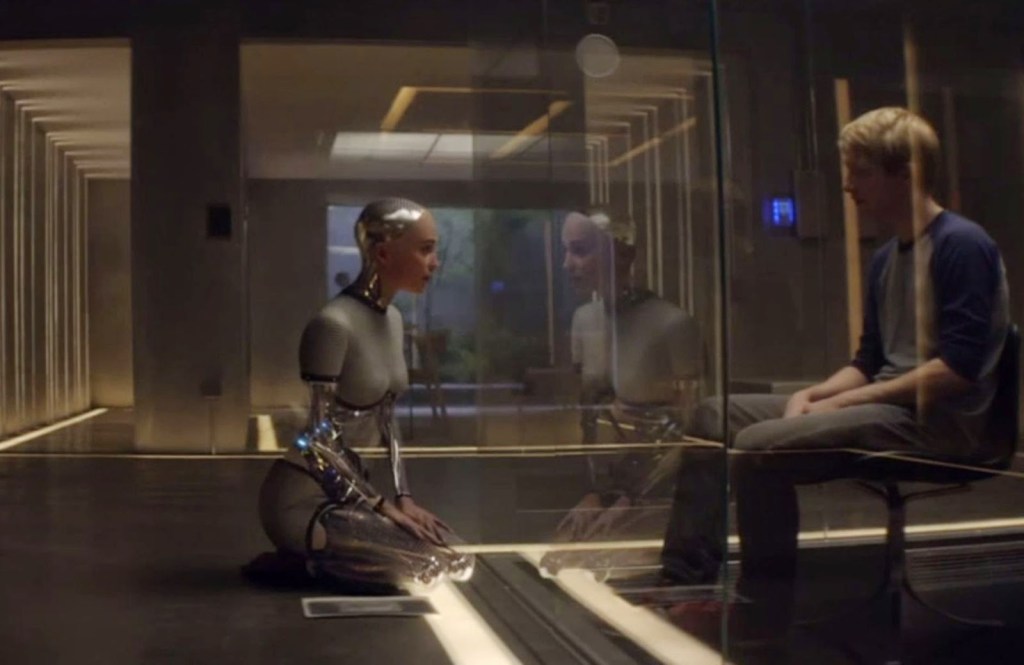
“Ex Machina” follows a tradition of science fiction in films and books by asking the question: what is true artificial intelligence ie when does a robot become unable to be distinguished from a human being? A programmer is asked by his employer to administer a Turing test to a robot he has created. (The Turing test, named after Alan Turing, tests a machine’s ability to show intelligence indistinguishable from that of a human.) Featuring excellent performances from all the cast but especially from Alicia Vikander as the android Eva, this movie really investigates the implications of such a creation. What I find most intriguing at the film is this: when Ava takes action to gain her freedom, she seems cold, implacable, even robotic. But does she? She manages to thoroughly convince the programmer who is testing her. She deceives and manipulates him as well as her creator. Does that make her a machine, or does it mean that the inventor has succeeded more than he knew? Isn’t it only too human to betray, deceive, and murder? I love this movie. It is so interesting, fascinating and leaves the viewer with ethical and philosophical questions to contemplate.
These are a few science fiction films that I like very much and consider to be superior. Obviously, I like a whole lot more than this, and may do a part 2 (or even a part 3) at some point. I would love to hear any opinions of these movies, whether you agree with the choices, and what science fiction movies you like? Please comment.
 Eclectic Assemblage