I need to start this with a disclaimer. What is generally considered to be Vincent Price’s best movie (“Witchfinder General”) will not be appearing on this list, because I haven’t seen it. (It’s on my ‘to watch’ list, along with a million other movies.)
You would be forgiven for thinking that Price only starred in horror movies, but that is far from the case. His first horror movie was “House of Wax” in 1953, but he had appeared in many mainstream movies prior to this, including well-known films such as “Laura” and “The Ten Commandments”. Price is often pigeon-holed as an over-the-top, moustache-twirling bad guy, but he was far more flexible than this, giving some amazing performances. He was a very good villain, however.
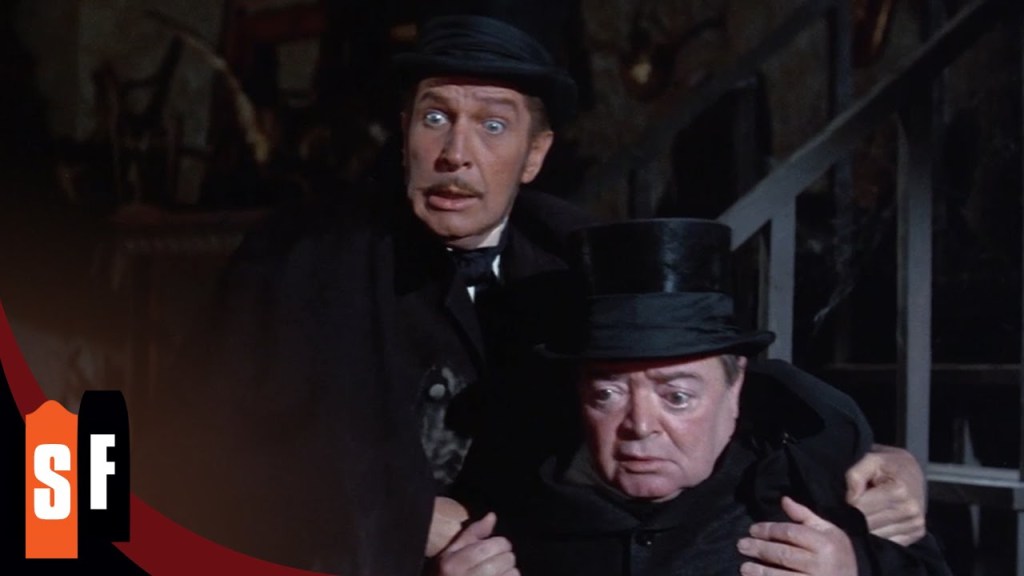
In “Comedy of Terrors” (1963) Price shares the screen with Peter Lorre, Boris Karloff and Basil Rathbone. Price and Lorre are dodgy undertakers who are in financial straits and being hounded by Rathbone as their landlord. Price is suitably obnoxious, bullying his sidekick Lorre, and deciding that bumping people off as a way of drumming up business is a great idea. I have reviewed it separately, so I would refer you to that. Suffice it to say, it’s hilarious and all the cast are great in it. It’s a great watch.
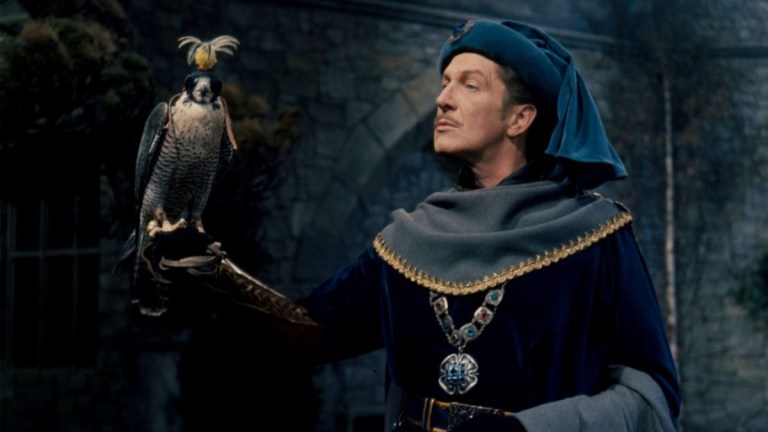
“Masque of the Red Death” (1964) is a great movie for Price, and of his movies that I’ve seen I consider it to be his best role. He plays a powerful aristocrat who gives shelter to the surrounding nobility during an outbreak of a plague called ‘the red death’. It seems on the surface to be another evil baddy doing bad things to the people around him, but in the end it turns into a fight between good and evil, faith and faithlessness, God and the devil. Price is Prospero, a devil worshipper, but is not at any point over the top or hammy. He is a sadist, but a very logical one. He has excellent reasons for his views which he espouses to Francesca (Jane Asher), who is young and only has her faith and love to resist him. Their conversations are some of the best parts of this film. The finale is eerie and gripping, where the fate of the castle’s inhabitants is depicted in a stylistic, symbolic way. Again, I have reviewed this separately, and you should go and read my full review.
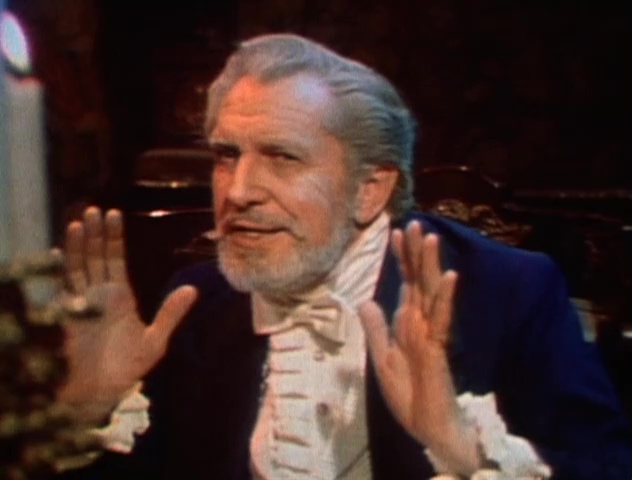
“An Evening of Edgar Allen Poe” (1970) is something a little different. Price is the only actor to appear on screen. The film is of Price reciting four of Poe’s stories: The Tell-Tale Heart, The Sphinx, The Cask of Amontillado, and The Pit and the Pendulum. These stories are first-person accounts, so Price is essentially acting the part of the narrator of these tales. It is wonderfully acted by Price, as the crazy protagonist, or the villain, or the schemer. He relates each story as if he is that person, telling you, the viewer, exactly how it happened. I found myself totally immersed in the stories as he told them. He is quite magnificent in this, and I would strongly recommend it to every Price and/or Poe fan.
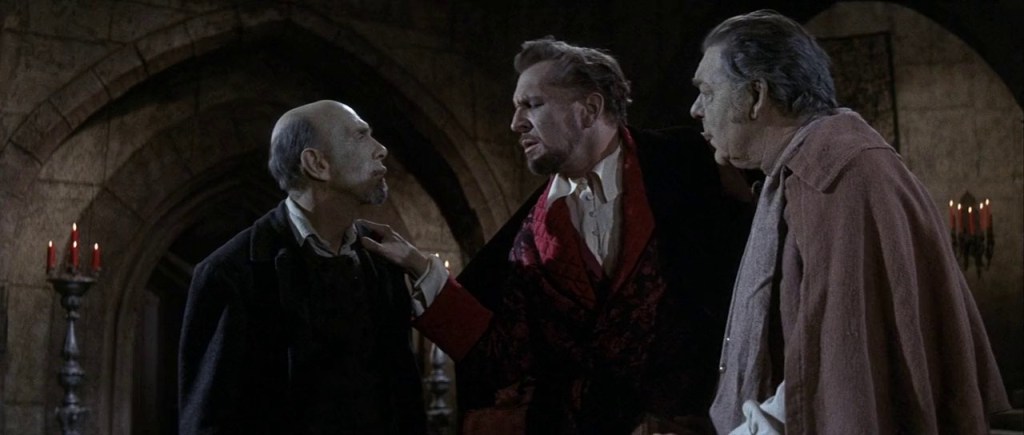
“The Haunted Palace” (1963) was billed at the time as another in Roger Corman’s Poe series but is in fact based on an HP Lovecraft story called ‘The Case of Charles Dexter Ward’. However, the distribution company decided to market it in this way in order to capitalize on the success of the other Poe films. Price plays a dual role in this – the innocent Charles Ward and his not so innocent ancestor Joseph Curwen. Curwen was burned at the stake for witchcraft, and, as these baddies usually do, cursed the village and vowed to return and take his revenge. A century later, along comes Ward and his wife (Debra Paget) who have inherited the old house. Spooky goings on ensue, as Curwen returns from the dead to possess the body of his descendant. It’s not Price’s best work, but it’s a lot of fun. The atmosphere is suitably gothic, there are chills and scares, and the sets are beautiful. Price is ably supported by an excellent cast which also includes Lon Chaney Jr.
“Theatre of Blood” (1973) has an incredible line-up of British actors supporting Price. He plays Edward Lionheart, a Shakespearian actor who refuses to play anything else. He gets a lot of work so he can’t be that bad, however the critics can’t stand him, and constantly give him bad reviews. When the critics give their annual award to someone else, Lionheart makes a scene and then (apparently) commits suicide. (We all know where this is going). I have reviewed this film separately, so I would urge you to read that. Suffice it to say, Price (aided and abetted by Diana Rigg) has the opportunity to murder large swathes of the wonderful cast, which included Jack Hawkins, Michael Hordern, Arthur Lowe, Robert Morley, Dennis Price, Eric Sykes, and Joan Hickson. This movie is camp, outrageously over-the-top, funny and bloody. It is Price at his hammiest, and funniest.
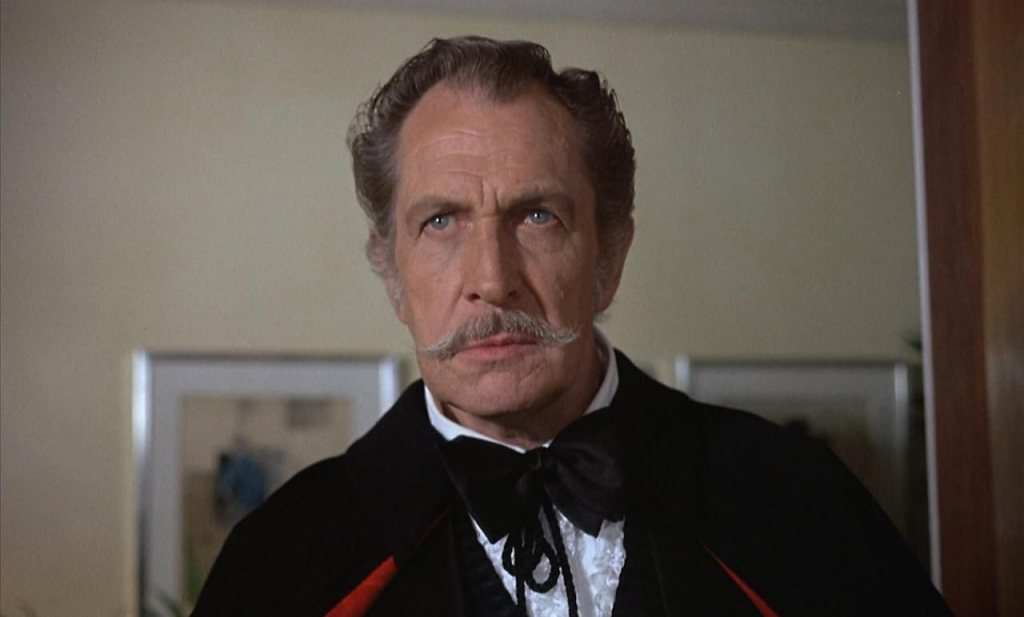
There are so many other, fabulous films that I could mention. Whether hammy, funny, or deadly serious, Price was always a treat to watch. I can’t think of a better way to spend the spooky season than with a festival of Vincent Price.
 Eclectic Assemblage